


🌾 Sabbath School Compact
Understand, deepen, and live the weekly lesson.
✉️ FIRST AND SECOND CORINTHIANS
🏙️ Lesson 1 – Paul’s Ministry in Corinth
📅 Study Week: June 27–July 3, 2026
🕊️ Sabbath: July 4, 2026
🏛️ Third Quarter 2026: 1 and 2 Corinthians
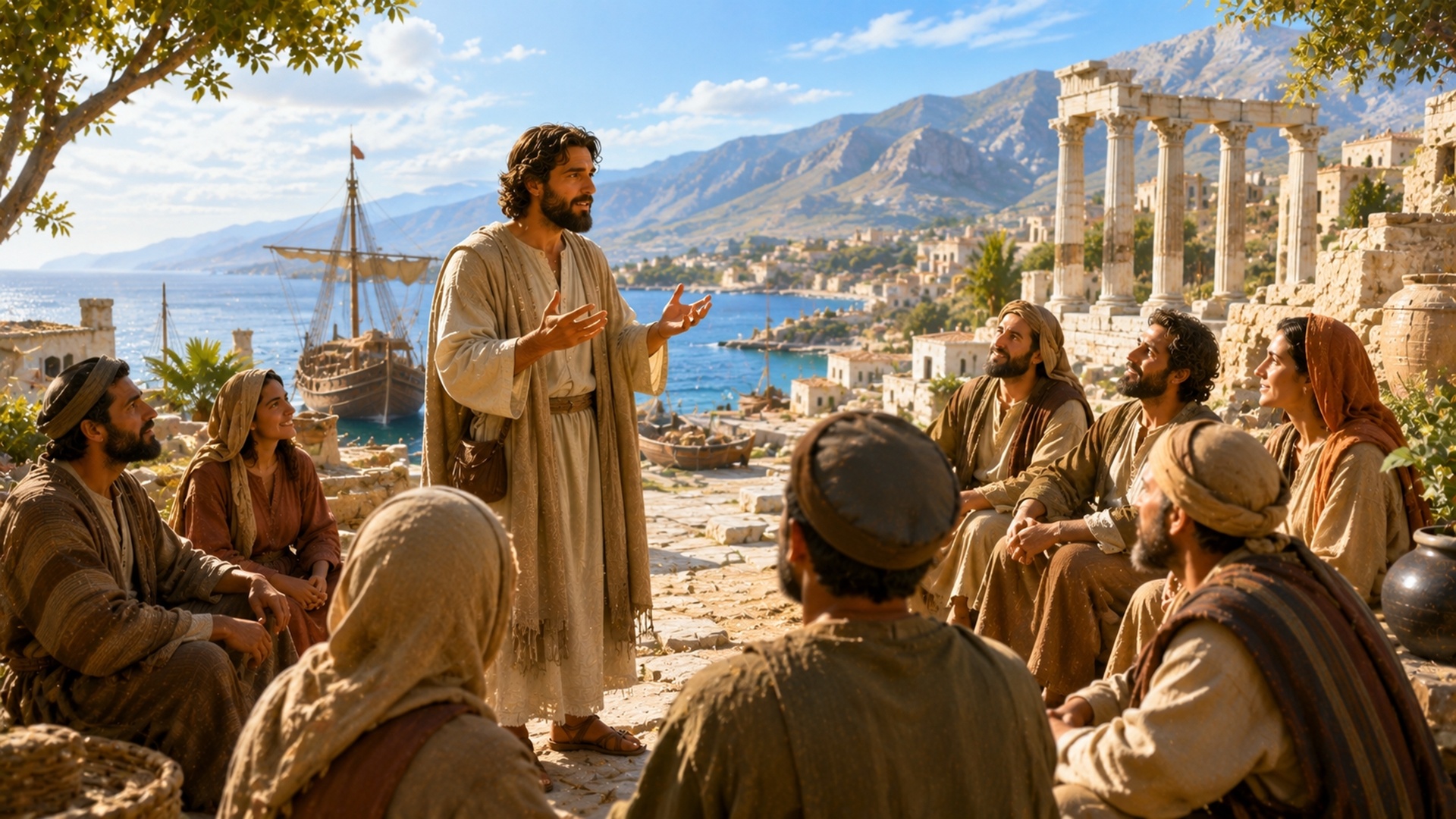
The first lesson takes us to the beginning of the story of the church in Corinth. Before Paul later addresses its conflicts, theological questions, and spiritual challenges, we first see how the gospel reached this important city. Corinth was economically prosperous, culturally diverse, religiously pluralistic, and characterized by widespread moral permissiveness. It was precisely there that Paul began his ministry, worked alongside Aquila and Priscilla, proclaimed Christ, and experienced both opposition and unexpected openness. From the very beginning, the lesson shows that God can prepare people and build His church even in a difficult environment.
💎 Memory Verse
“Do not be afraid, but speak, and do not keep silent; for I am with you … for I have many people in this city.”
Acts 18:9–10
Paul received these words in a situation in which his ministry was by no means easy. He was an experienced missionary, yet he still knew fear, exhaustion, and uncertainty. Christ did not promise him that all opposition would disappear, but gave him something greater: the assurance of His presence. Even before Paul could see what would result from his work, Christ already knew that many people in Corinth would respond to the gospel.
The study of the Letters to the Corinthians thus begins with an important truth: God’s work does not depend upon outward circumstances appearing ideal. Wherever Christ sends us, He is also present.
🧭 What Is This Lesson About?
During his second missionary journey, Paul traveled from Athens to Corinth. In Athens, he had spoken with Jews, people in the marketplace, and philosophers, seeking to reach individuals from very different backgrounds with the gospel. Corinth now presented him with new challenges. The city was strategically located between important trade routes and attracted merchants, travelers, soldiers, sailors, and people from many different cultures. Numerous religions, sharp social divisions, and an intense pursuit of status shaped public life.
Paul could easily have regarded Corinth as an unsuitable place for a Christian church. Instead, he began working there, earning his living as a tentmaker while simultaneously proclaiming the gospel. In Aquila and Priscilla, he found close fellow workers. When opposition arose in the synagogue, he shifted the focus of his ministry but did not abandon his mission. Crispus, the ruler of the synagogue, came to faith, and many other Corinthians heard the message, believed, and were baptized.
The lesson’s decisive question is therefore: Do we see people and places only as they presently appear, or do we believe that God is already working where we cannot yet see any results?
📖 The Lesson at a Glance
Paul understood his ministry as a calling. In 1 Corinthians, he describes himself as “called to be an apostle of Jesus Christ through the will of God.” His identity was therefore grounded not primarily in his abilities, education, or experience, but in the commission Christ had given him. This assurance was especially important because Paul repeatedly encountered opposition, criticism, and rejection. Those who serve only for human recognition quickly become discouraged when that recognition is withheld; those who know whom they serve possess a deeper foundation.
The events in Corinth also demonstrate that Paul did not wait for perfect conditions. He worked wherever people were and combined practical labor with missionary service. His relationship with Aquila and Priscilla also reveals how deeply God’s work depends upon cooperation. Paul was not an isolated individual working alone. People with different abilities, occupations, and life experiences became partners in mission.
Corinth’s cultural background explains many of the church’s later problems. The city was shaped by social competition, prosperity, religious diversity, and moral permissiveness. Those who accepted Christ did not automatically leave these cultural patterns of thought at the church door. This is why the Letters to the Corinthians address divisions, sexuality, lawsuits, food offered to idols, spiritual gifts, worship, and the resurrection.
The contemporary relevance of these letters lies precisely here. Every church lives within a culture, and every culture attempts to inscribe its values upon the thinking of believers. Being a Christian therefore means more than accepting certain religious beliefs; it means learning to view every part of life anew from the perspective of the gospel.
Paul did not merely want to establish a religious community in Corinth that differed outwardly from its surroundings. He wanted a church whose thinking, relationships, and decisions were shaped by Christ. This will become a recurring theme throughout the entire quarter.
🔎 A Deeper Thought
God Sees People Before We See Results
Perhaps the most powerful statement in the first lesson is found in God’s words to Paul: “I have many people in this city.” Remarkably, many of these people were apparently not yet Christians at that time.
Paul saw a difficult city filled with religious confusion and moral problems. Christ saw people who could be reached by the gospel. Paul saw opposition; Christ already saw a future church.
This perspective changes our understanding of mission. We do not know who may already be searching inwardly for truth, what questions someone may be carrying, or where the Holy Spirit has long been working. We must therefore not judge people prematurely according to their present condition.
Christian ministry does not consist of predicting who is likely to believe. Our responsibility is to reveal Christ faithfully while God works upon human hearts.
The same principle applies to places that appear difficult. A city, environment, family, or even a church may seem spiritually unpromising. The story of Corinth reminds us that God can see possibilities we do not yet recognize.
🔗 The Bible Explains the Bible
Isaiah 41:10 helps us understand Paul’s encouragement more deeply: “Fear not, for I am with you.” Throughout the Bible, God’s commission and God’s presence belong together. He does not send people alone into situations that exceed their strength.
Matthew 28:19–20 also connects mission directly with Jesus’ promise: “I am with you always.” The church therefore fulfills its mission not through its own strength, but in the presence of Christ.
Finally, 1 Corinthians 2:1–5 reveals what Paul had learned from his previous experiences. He did not want people’s faith to rest upon human eloquence or wisdom, but upon the power of God. Paul did not reject thought or education, but he knew that no human argument alone can renew a heart. That work belongs to the Holy Spirit.
💬 Questions for Reflection
Why is it important to know what God has called us to do? A clear calling protects us from constantly making our worth dependent upon approval, visible success, or recognition. Paul could continue working because he knew to whom he belonged and who had sent him.
What can we learn from the fact that Paul remained in Corinth despite the opposition? Difficulties are not automatically a sign that God has closed a door. A challenging environment may require patience, perseverance, and a willingness to wait for God’s guidance.
How strongly does the culture outside the church influence our thinking within the church? Corinth shows that conversion does not immediately transform every cultural pattern. Christians must continually examine their values in the light of God’s Word and ask whether Christ or their surroundings determine how they think about success, relationships, power, sexuality, and community.
Where might God already have prepared people whom we have not yet noticed? This question directs our attention away from apparent hopelessness and toward God’s hidden work.
🌱 Understand – Deepen – Live
Understand in this lesson means not viewing Paul as an unshakable religious hero, but as a called human being who was completely dependent upon Christ. His strength did not consist in never experiencing fear, but in trusting God’s presence more than his fear.
Deepen means viewing Corinth as more than a historical setting. The city reveals how powerfully culture can shape a church’s thinking. This is why the Letters to the Corinthians remain relevant: they demonstrate how the gospel seeks to transform every area of life, step by step.
Live ultimately means learning to see people through God’s eyes. We must not hastily decide who can be reached and who cannot. Christ may already see a spiritual future where we currently see only obstacles. Our responsibility is to speak, serve, and trust faithfully.
📜 Ellen White on the Subject
In the chapter about Corinth in The Acts of the Apostles, Ellen White describes how Paul, following his experiences in Athens, placed Christ and the cross even more deliberately at the center of his proclamation. She also makes it clear that Paul initially regarded Corinth as an extremely difficult mission field and at times even considered moving on.
It was precisely at that moment that he received the divine assurance that he should not remain silent. Christ knew that many people in this seemingly hopeless city would respond to the gospel. Paul was therefore not to judge according to the visible opposition, but to trust God’s Word.
This thought accompanies the entire lesson: the missionary sees only a small part, but God already sees the people, the fruit, and the future of His work.
✨ The Thought for This Sabbath
Corinth was not an easy place to establish a church. The city was wealthy, religiously diverse, morally confused, and deeply shaped by social competition. Paul himself was not free from uncertainty and emotional strain. Nevertheless, Christ did not say to him, “Find an easier place.” He said: “Do not be afraid … for I am with you.”
Perhaps this is the most important message of the first lesson. God’s presence is more important than perfect conditions.
The church in Corinth, which we will study during the coming weeks, would make many mistakes. Its members would argue, adopt false ideas, and cause Paul great concern. Nevertheless, Christ did not abandon them. He worked upon them, corrected them, and led them forward step by step.
The same gospel applies today. God does not wait for people or churches to provide ideal conditions. He begins working in the midst of their present reality.
Wherever Christ sends us, we may therefore continue speaking, serving, and hoping. Sometimes God already sees a harvest while we are still standing before what appears to be a difficult field.
