


✉️ FIRST AND SECOND CORINTHIANS
🌅 Lesson 8. The Power of Christ’s Resurrection
⚓ 8.2 The Risen Christ, Our Only Hope!
🕊️ Without the Resurrection There Is No Forgiveness, No Hope, and No Eternal Life
📖 1. Introduction
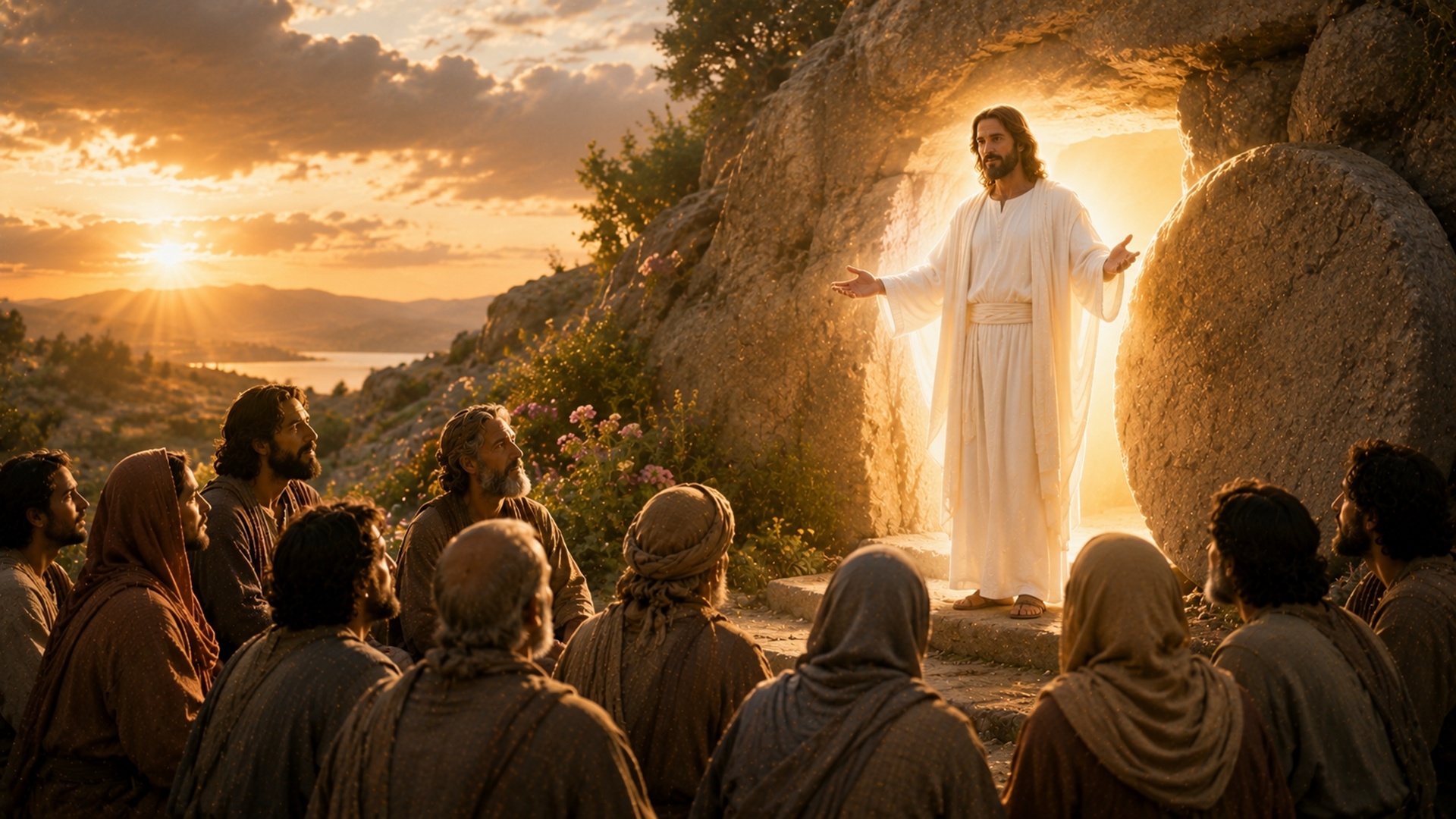
Paul shows with great clarity in 1 Corinthians 15 how decisive the resurrection of Christ is for faith. For him, it is unthinkable to confess Christ while at the same time denying the resurrection of the dead. If Christ had not risen, the gospel would be empty, faith useless, and hope destroyed. The apostles would then be false witnesses, the dead would be lost, and believers would still be in their sins. Paul presents these consequences so clearly so that the Corinthians may recognize how dangerous this false view is. The Christian faith stands or falls with the reality of Jesus’ resurrection.
📜 2. The Biblical Foundation
Paul writes:
“And if Christ has not been raised, our preaching is useless and so is your faith.”
1 Corinthians 15:14
He continues:
“And if Christ has not been raised, your faith is futile; you are still in your sins.”
1 Corinthians 15:17
And then:
“Then those also who have fallen asleep in Christ are lost.”
1 Corinthians 15:18
Finally, Paul summarizes the whole tragedy:
“If only for this life we have hope in Christ, we are of all people most to be pitied.”
1 Corinthians 15:19
These verses show: Without the resurrection of Christ, there would be no genuine Christian hope.
🌍 3. Connection to Our Time
Even today, there are people who respect Jesus but question the bodily resurrection. Some see the resurrection only as a symbol, a spiritual experience, or an idea of hope. Paul does not leave this possibility open. For him, the resurrection is a real event without which the entire faith would collapse. If Christ does not live, then He cannot save, forgive, return, or raise the dead. Therefore, the resurrection is not a secondary issue but the foundation of Christian certainty.
💡 4. Central Message of the Lesson
👉 The risen Christ is our only hope, because without His resurrection there would be no forgiveness, no salvation, no future for the dead, and no victory over death.
✝️ 5. Theological Emphasis
The theological emphasis of this lesson is that the resurrection of Christ is inseparably connected with our salvation. Paul shows not merely that the resurrection is important, but that without it everything would be lost. The cross and the resurrection belong together.
If Christ had not risen, we could not know whether His sacrifice had truly been accepted. Jesus’ death would then be the end of a tragic story, but not God’s victory over sin and death. The resurrection is God’s confirmation that Christ truly conquered.
Paul says: If Christ has not risen, then preaching is useless. This means that the apostolic proclamation would lose its content and power. Preaching would no longer be good news, but empty speech. It would promise something that is not true.
Faith would also be useless. Faith is only as strong as its object. If Christ had remained dead, then faith in Him could not save. It would be religious hope without a divine foundation. Paul therefore shows that Christian faith is not merely faith in itself, but trust in the living Christ.
Especially serious is the statement: “You are still in your sins.” This means that without the resurrection there would be no assured forgiveness. The resurrection shows that Jesus’ death was not defeat but redemption. It confirms that the power of sin has been broken.
Those who have died in Christ would also be lost if Christ had not risen. Paul does not say that they are already finally living in heaven and therefore have no need of a resurrection. He assumes that their hope is directed toward the future resurrection. This is precisely why Christ’s resurrection is so decisive.
Here the biblical teaching about death also becomes important. The Bible frequently describes death as sleep. The dead wait unconsciously for the resurrection at the return of Christ. If there were no resurrection, there would be no future hope for them.
This shows how inseparably resurrection and the Second Coming belong together. Christ has risen, and therefore those who have fallen asleep in Christ will also rise. Our hope does not rest in an immortal soul that continues to live independently of the body, but in God’s power to recreate the whole person.
Paul also says that without the resurrection Christians would be the most miserable of all people. Why? Because they would be living for a hope that was not true. They would sacrifice, suffer, serve, and hope for a future that would not exist without the resurrection. But because Christ lives, this hope is not deception but truth.
The theological core is this: The resurrection of Christ is the proof that the gospel is true, sin has been defeated, forgiveness stands secure, and the future of believers does not end in death.
🌟 6. Spiritual Deepening
This lesson leads us to the question of what our hope truly rests upon. Many people place their hope in health, security, family, possessions, or a long life. Yet all these things are fragile. Paul points us to a hope stronger than death: the risen Christ.
If Christ had not risen, death would have the final word. Every grave would then be permanent, every tear without a final answer, and every farewell without secure hope. But Paul proclaims the opposite: Christ lives. Therefore, death is no longer the final victor.
This hope changes the way we face suffering. Christians do not suffer less than other people. They experience sickness, loss, disappointment, and death. But they see these experiences in the light of the resurrection. They know that what is visible is not the final reality.
The resurrection also gives assurance of forgiveness. Many people carry guilt with them. They wonder whether God can truly forgive. The resurrection answers: Yes. Christ lives because His sacrifice was perfect. Whoever trusts Him may know that sin no longer has the final power over his life.
Paul also connects the resurrection with the truth of proclamation. If Christ lives, then it is worth sharing the gospel. Preaching is not merely tradition. Mission is not in vain. Every testimony about Jesus points to the living Savior.
This lesson also protects us from a Christianity meant only for this life. If Christ were merely a moral teacher for a better life here and now, faith would be too small. Jesus is more. He is the Lord over life and death.
The hope of the resurrection helps us understand death biblically. Death is an enemy, not a friend. It was not God’s original plan. Yet in Christ this enemy has been defeated. For believers, death is like a sleep from which Christ will call them at His return.
This is a great comfort. Whoever dies in Christ does not lose his hope. He sleeps until Jesus returns. His next conscious experience will be the voice of Christ and the resurrection to life. Therefore, the return of Jesus is truly near for every believer.
This view protects us from false ideas. If the dead were already permanently in heaven or hell, the future resurrection would lose its significance. Paul, however, makes the resurrection central to our hope. Salvation concerns the whole person, not merely a disembodied part.
God does not want to save merely a soul, but to restore the whole human being. Body, mind, personality, relationships, and life all belong to His plan of salvation. The resurrection shows that God does not abandon His creation. He renews it.
This hope gives strength for faithfulness. If Christ lives, then no sacrifice is in vain. No service done in love is lost. No suffering endured in faithfulness goes unnoticed. No grave remains closed forever. Christ has opened the future.
Therefore, the risen Christ is our only hope. It is not our performance, our piety, our strength, or our knowledge that saves us. Christ saves. And because He lives, our hope is alive.
🔧 7. Application in Everyday Life
Practical Steps:
- Hold firmly to the truth that your hope rests not on feelings but on the risen Christ.
- Seek forgiveness not in your own achievements but in the completed work of Jesus.
- Allow the hope of the resurrection to shape the way you face death and grief.
- Proclaim Jesus not merely as a teacher but as the living Savior.
- Comfort those who mourn with the biblical hope of the resurrection.
- Live in such a way that your daily life shows: Death does not have the final word.
- Examine whether your faith is directed only toward this life or toward God’s eternal future.
- Remember in difficult times: Christ lives, and therefore hope is real.
❓ 8. Reflection Question
How does my everyday life show that my hope truly rests on the risen Christ and not merely on the securities of this life?
🌟 9. Closing Thought
Paul makes it clear: Without the resurrection of Christ, everything would be lost. Preaching would be empty, faith useless, sin undefeated, and the dead without hope. But Christ has risen. Therefore, our faith is not deception but truth. The resurrection confirms forgiveness, establishes our hope, and guarantees the future of those who have fallen asleep in Christ. Because Jesus lives, we can live, believe, serve, die, and wait for His return with confidence.
“And if Christ has not been raised, your faith is futile; you are still in your sins.”
1 Corinthians 15:17 ⚓🕊️🙏✨
