


📅 August 28, 2026
📚 BELIEVE HIS PROPHETS
📖 Daily Bible Reading: 🎵 Psalm 21
👑 Joy in God’s Victory
✨ The King Gives Thanks—and Recognizes That All Strength Comes From God
🌐 Read online here
🌅 Introduction
Psalm 21 is closely connected with Psalm 20. There, before the conflict, the people prayed for God’s help for the king. Now they look back with gratitude on the victory they have experienced. The king does not rejoice in his own strength, but in the power of the Lord. Psalm 21 is therefore a song of gratitude, trust, and hope. At the same time, the psalm points beyond the historical king of Israel to the King appointed by God, whose reign will ultimately never fail.
⋯⋯⋯⋯⋯⋯⋯⋯⋯⋯◆⋯⋯⋯⋯⋯⋯⋯⋯⋯⋯
🔍 Commentary
The psalm begins with joy: “The king shall joy in thy strength, O LORD.” This statement immediately places the emphasis where it belongs. The king possesses power, responsibility, and influence, yet his true strength does not come from himself.
The victory is not celebrated as a personal achievement, but as a gift from God. This reveals an important spiritual attitude: success should not lead to pride, but to gratitude.
The psalm then recalls that God granted the desire of the king’s heart. What was still expressed as a prayer in Psalm 20 is now described as an answer that has been experienced. Looking back, the people recognize that God has heard them.
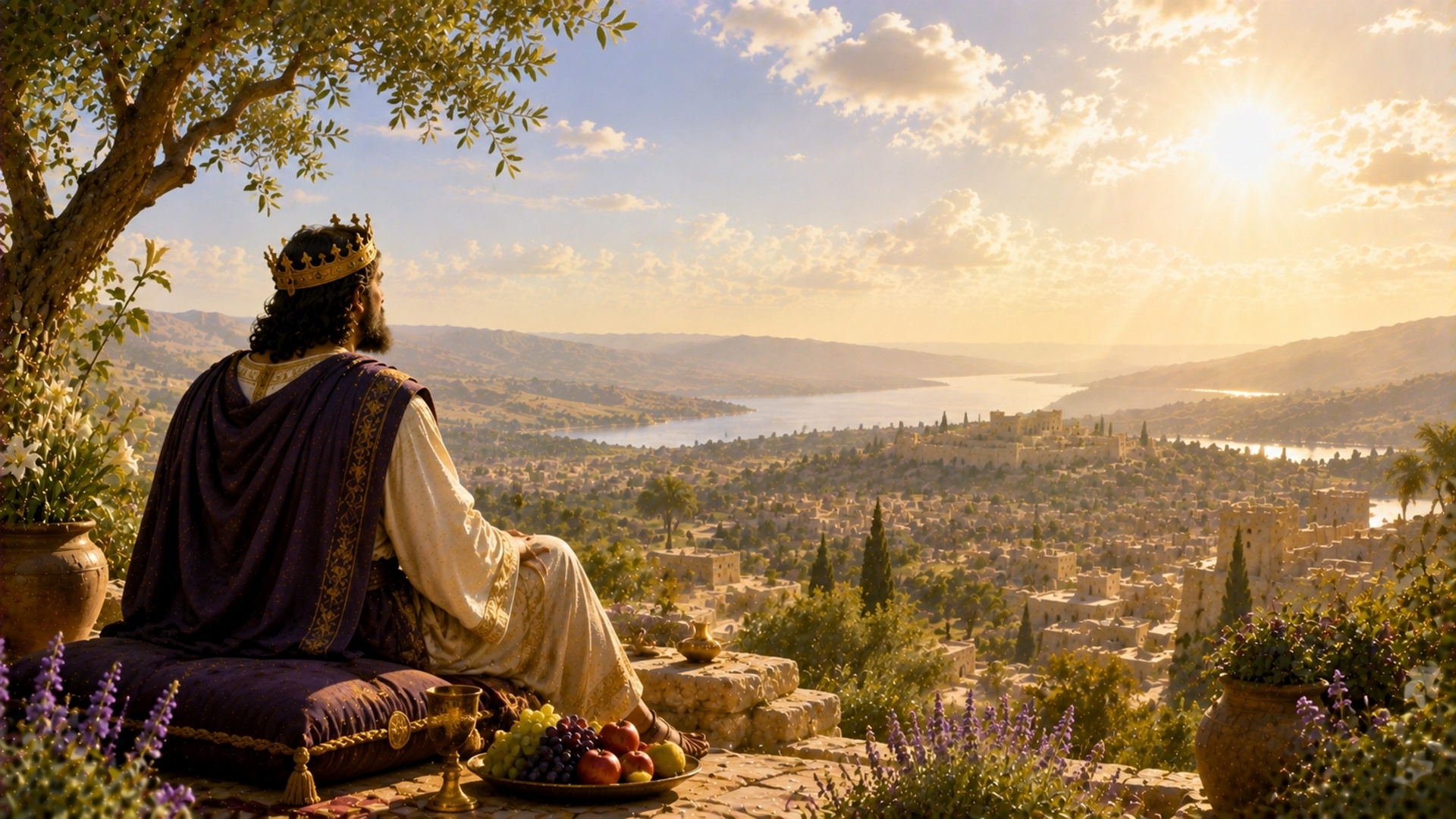
God meets the king with rich blessings and places a crown of pure gold upon his head. These images speak of honor, confirmation, and royal dignity. Yet here too, it remains clear that everything comes from God’s hand.
The king asked for life, and God gave him life and a future. The language of the psalm reaches beyond a single military deliverance and opens our eyes to the enduring significance of the kingship established by God.
The king’s glory is great because of God’s salvation. Honor and majesty are bestowed upon him. Once again, the psalm emphasizes that whatever the king possesses, he has received from God.
Especially beautiful is the statement that God has made him “most blessed for ever” and filled him with joy in His presence. The greatest gift is not the crown, the victory, or the power, but fellowship with God.
The psalm then identifies the reason for the king’s security: “For the king trusteth in the LORD, and through the mercy of the most High he shall not be moved.” His stability does not arise from political wisdom or military superiority, but from trusting in God’s mercy.
In the second part, the tone changes. The focus now turns to the enemies of God and the king. The psalm describes God’s judgment in powerful images. Those who deliberately oppose God’s rule and devise evil plans will ultimately not endure.
These verses remind us that God’s goodness and His judgment do not contradict one another. A God who is truly just cannot allow evil to remain unaddressed forever.
God’s judgment is not directed against people arbitrarily, but against rebellion, violence, and deliberate wrongdoing. The psalm looks ahead to the time when God will finally restrain and overcome evil.
The historical background concerns the king of Israel and his enemies. At the same time, however, Psalm 21 also possesses a messianic dimension. The image of a King appointed by God, whose reign endures and whose enemies are ultimately defeated, points beyond David.
In the New Testament, Jesus Christ is presented as the Son of David, the Messiah, and the King. His victory, however, differs fundamentally from ordinary earthly victories. Through His own sacrifice and resurrection, He conquers sin and death.
From a Christian perspective, Psalm 21 can therefore also be read as a glimpse of Christ’s final triumph. The King who was initially rejected will ultimately be acknowledged as Lord.
The psalm ends with a call to praise: “Be thou exalted, LORD, in thine own strength: so will we sing and praise thy power.” In this way, everything returns to God. The victory does not lead to the king’s self-glorification, but to the worship of the Lord.
Psalm 21 thus reveals an important spiritual progression: prayer is answered, help is experienced, gratitude arises, and in the end God is glorified. This is also how we should respond to God’s blessings.
⋯⋯⋯⋯⋯⋯⋯⋯⋯⋯◆⋯⋯⋯⋯⋯⋯⋯⋯⋯⋯
📌 Summary
Psalm 21 is a song of thanksgiving after an experienced victory. The king rejoices in God’s strength and recognizes that life, honor, blessing, and stability come from the hand of the Lord. At the same time, the psalm looks ahead to God’s righteous judgment upon evil. Beyond the historical king, it points to the messianic hope and the final victory of the King appointed by God.
⋯⋯⋯⋯⋯⋯⋯⋯⋯⋯◆⋯⋯⋯⋯⋯⋯⋯⋯⋯⋯
💡 Message for Us Today
We often ask God intensely for help, yet after a prayer has been answered, there is a danger that we will quickly move on and forget to whom we owe our deliverance. Psalm 21 reminds us to look back consciously and thank God. Abilities, success, protection, and new opportunities are not reasons for self-exaltation, but invitations to worship. In Jesus Christ, we also have the greatest reason for joy: His victory over sin and death is certain, and His reign will ultimately be revealed in all its fullness.
⋯⋯⋯⋯⋯⋯⋯⋯⋯⋯◆⋯⋯⋯⋯⋯⋯⋯⋯⋯⋯
💭 Thought for Reflection
For which answered prayers and moments of experienced protection should I consciously thank God today, instead of taking them for granted?
