


📅 August 21, 2026
📚 BELIEVE HIS PROPHETS
📖 Daily Bible Reading: 🎵 Psalm 14
🧭 When Humanity Wants to Live Without God
✨ God sees the heart – and seeks people who search for Him
🌐 Read online here
🌅 Introduction
Psalm 14 paints a sobering picture of the person who pushes God out of his thoughts and life. The Psalm begins with the well-known statement: “The fool says in his heart, ‘There is no God.’” This is not primarily about intellectual atheism, but about an attitude toward life that acts as though there were no God before whom human beings are accountable. Yet in the midst of the description of human corruption, hope remains: God looks for people who recognize Him and seek Him.
⋯⋯⋯⋯⋯⋯⋯⋯⋯⋯◆⋯⋯⋯⋯⋯⋯⋯⋯⋯⋯
🔍 Commentary
David begins with a sharp statement: “The fool says in his heart, ‘There is no God.’” In Hebrew thought, foolishness is not simply a lack of intelligence. A fool is rather someone who disregards God’s order and wants to live independently of Him.
The real meaning is therefore this: A person lives as though he were accountable to no one. When God disappears from the center, the understanding of good and evil also changes. David describes the consequences in clear words: behavior becomes corrupt, and what is good increasingly disappears from view.
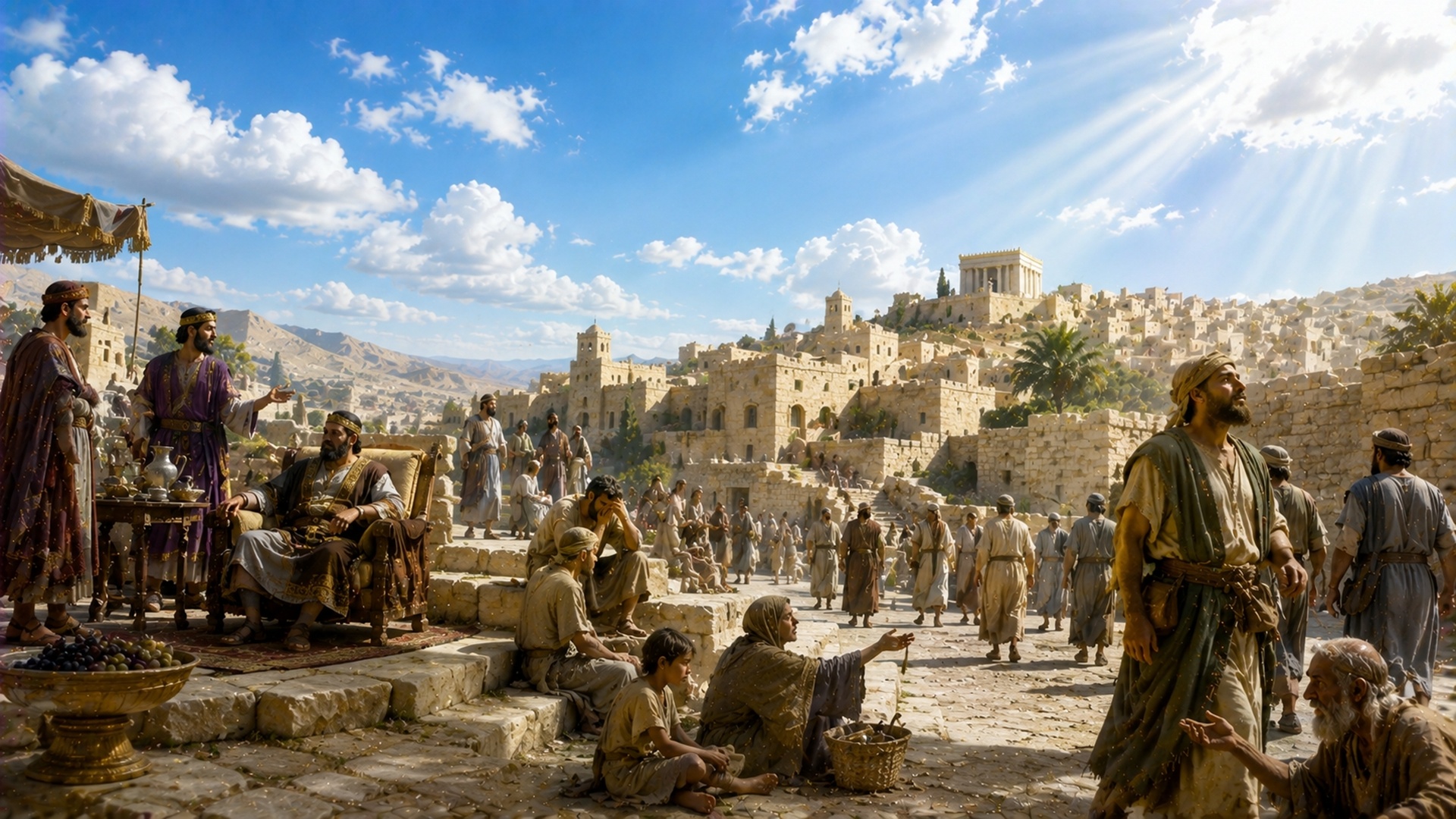
Then the perspective changes. It is no longer the human being looking at the world, but God looking down from heaven upon humanity. He searches for someone who understands, for a person who seeks God.
This scene reminds us that God knows the human heart. Outward religiosity is not enough. What matters is whether a person truly seeks God and orders his life according to Him.
Yet the result of this divine search is sobering: All have turned aside. No one can present himself as perfectly righteous by his own strength. The apostle Paul later takes up this very thought in Romans 3 when he describes the universal reality of sin.
Psalm 14 therefore makes it clear that humanity’s problem lies deeper than individual sinful acts. It concerns the heart. When a person distances himself from God, this separation affects his thinking, his decisions, and the way he treats others.
David especially mentions those who oppress other people and afflict God’s people. They live as though there were no accountability before God. But David makes one thing clear: God is with those who trust Him. The oppressed may appear outwardly weak, but they are not alone.
The poor and afflicted seek refuge in God. People may mock their hope, but the Lord Himself remains their security. This changes the perspective of the Psalm. The power of the wicked is not final.
At the end, David turns his gaze toward Zion and longs for God’s salvation. He waits for the moment when the Lord will restore the fortunes of His people. Then joy and rejoicing will return.
This hope reaches beyond David’s immediate situation. It points toward God’s final intervention. From a Christian perspective, the hope of salvation finds its deepest fulfillment in Jesus Christ, through whom God delivers humanity from the dominion of sin and makes a new relationship with Him possible.
Psalm 14 begins with the statement of a heart that wants to live without God and ends with the hope of God’s salvation. Between these two poles stands the great question: Will the human being continue on his own path, or will he begin to seek God?
⋯⋯⋯⋯⋯⋯⋯⋯⋯⋯◆⋯⋯⋯⋯⋯⋯⋯⋯⋯⋯
📌 Summary
Psalm 14 describes the spiritual foolishness of a life without God. Human beings turn away from their Creator and increasingly lose their orientation toward what is good. But God sees every human heart and looks for those who seek Him. The Psalm ends with the hope that God will save His people and restore their fortunes.
⋯⋯⋯⋯⋯⋯⋯⋯⋯⋯◆⋯⋯⋯⋯⋯⋯⋯⋯⋯⋯
💡 Message for Us Today
It is possible to believe in God with our lips and yet live in everyday life as though He did not exist. Psalm 14 therefore calls us to honest self-examination. Am I truly seeking God? Do I allow His Word to shape my decisions? The good news is this: God is not looking for perfect people, but for hearts that turn toward Him. In Jesus Christ, He opens the way back to Himself and gives hope where human strength reaches its limit.
⋯⋯⋯⋯⋯⋯⋯⋯⋯⋯◆⋯⋯⋯⋯⋯⋯⋯⋯⋯⋯
💭 Thought for Reflection
Are there areas of my life in which I believe in God, but in practice make decisions as though He were not there?
