


👤 The Biblical Person of the Day
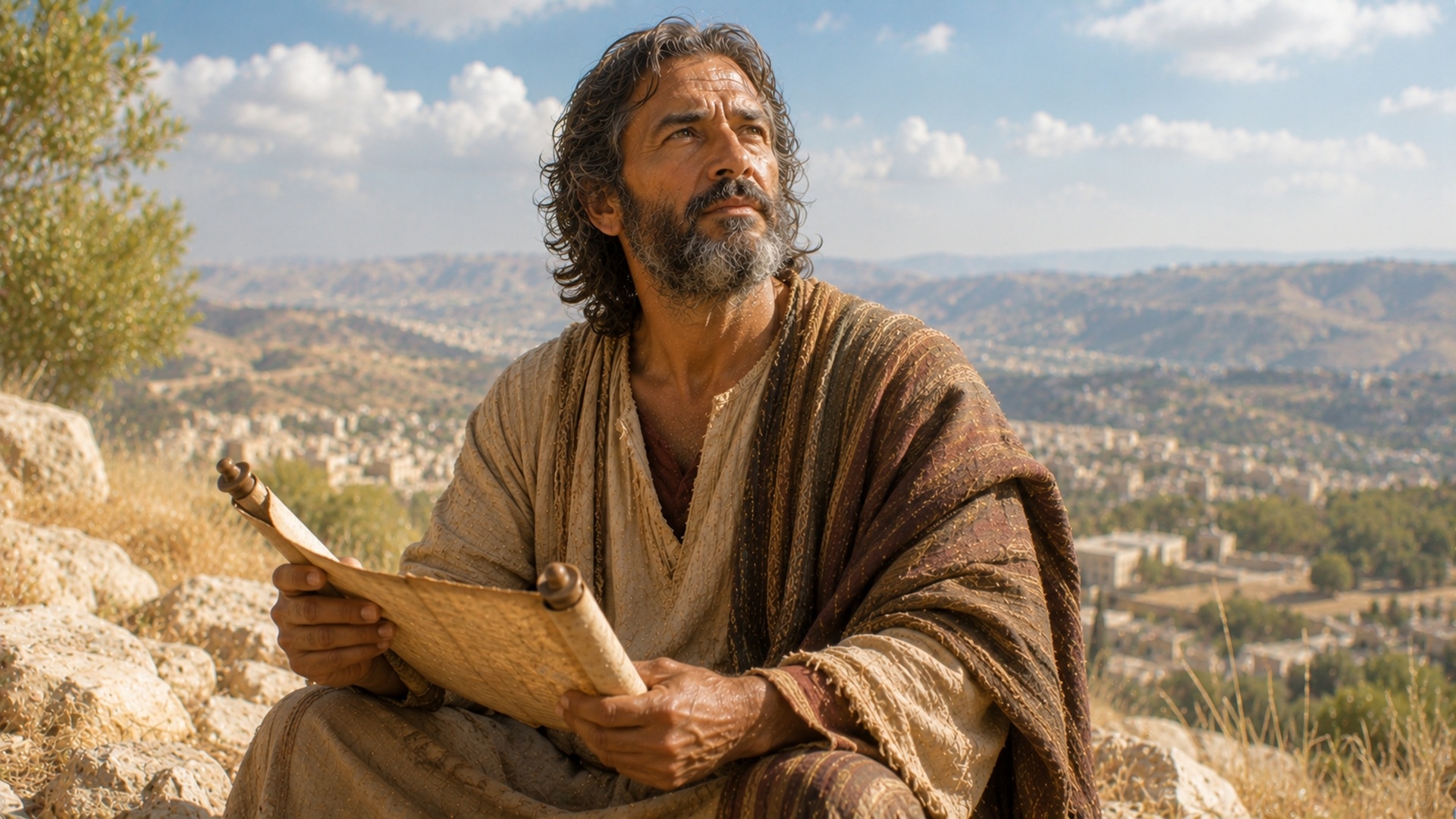
⛰️ Habakkuk – the Prophet with Honest Questions
📌 Profile
- Name: Habakkuk
- Time of birth: probably around the 7th century BC
- Place of birth: unknown
- Time of death: unknown
- Age: unknown
- Occupation: Prophet
📖 Short Story
Habakkuk was a prophet of God during a difficult time. He saw violence, injustice, conflict, and spiritual decline, and he could not understand why God seemed to remain silent.
Unlike many other prophets, Habakkuk does not first speak to the people, but directly to God. He openly brings his questions, distress, and confusion before the Lord.
He asks why God allows evil and why He does not intervene. His words reveal a faith that is not superficial, but one that wrestles honestly.
God answers Habakkuk and announces that He will use the Chaldeans. Yet this answer troubles the prophet even more, because the Chaldeans themselves were a cruel and violent people.
Habakkuk does not understand everything immediately. He takes his position on the watchtower, waits for God’s answer, and remains in conversation with the Lord.
God shows him that pride will fall, but the righteous person will live by faith. This message later became one of the most important declarations of faith in the Bible.
At the end, Habakkuk no longer stands only with questions, but with trust. Even if the fig tree, the vines, the fields, and the herds fail, he will still rejoice in the Lord.
🔥 The Decisive Moment
Habakkuk brings his honest questions before God and learns to trust by faith even without receiving complete answers.
✨ 7 Special Facts About Habakkuk
- He was a prophet with deep questions
- He spoke openly with God about injustice and violence
- He waited for God’s answer
- He received the message: The righteous shall live by faith
- He showed that lament and faith can exist together
- He ended his book with a powerful confession of trust
- He teaches that joy in God can be stronger than outward loss
⚖️ Strengths & Weaknesses
✔ honest
✔ searching
✔ strong in faith
✔ willing to wait for God’s answer
❌ wrestled with doubt and lack of understanding
❌ did not understand God’s ways at first
❗ The Struggle That Shaped Him
The Bible does not report any particular personal failure committed by Habakkuk.
➡️ His life is shaped primarily by honest questions, spiritual wrestling, and growing trust.
📜 Key Verse
“But the just shall live by his faith.” (Habakkuk 2:4)
🧠 The Life Lesson
Faith does not mean always understanding everything, but trusting God even when His ways remain hidden.
🎯 Application for Today
Bring your questions honestly before God. Do not suppress your doubts, but allow them to become part of a conversation with the Lord that leads you into deeper trust.
❓ Question for You
What question are you bringing before God in which you must learn to continue standing in faith?
📌 Context
Habakkuk probably ministered shortly before Babylon rose to become a world power and during a time when Judah was being shaken spiritually and morally.
🔗 Connection
Habakkuk’s message is closely connected with the themes of faith, judgment, and trust. His key verse is later quoted in the New Testament.
Conclusion:
Habakkuk shows that genuine faith does not have to be without questions. It may wrestle, lament, and wait—and still say in the end: I will rejoice in the Lord.
Until tomorrow with the next biblical person! 📖
✨ The Life Story ✨
✨ The Life Story of Habakkuk – From Questions to Trust ✨
🌄 A Prophet in Troubled Times
Habakkuk lived during a time when much had fallen out of balance. Violence, injustice, conflict, and spiritual confusion shaped everything he saw around him.
He was a prophet, yet his message does not begin with an address to the people. It begins with a lament before God.
Habakkuk looks at the conditions of his time and cannot remain silent. His heart wrestles with the question of why God sees evil and yet does not intervene immediately.
❓ The Honest Question to God
Habakkuk asks: How long shall I cry out, and You will not hear? These words reveal a man who does not want to let go of God, even though he does not understand God’s actions.
His lament is not an expression of indifference, but of faith. Precisely because he believes in God’s justice, he suffers deeply because of the injustice around him.
He does not take his confusion away from God, but brings it to God. This makes his story especially comforting for everyone who lives with difficult questions.
⚖️ An Answer That Shakes Him
God answers Habakkuk, but the answer is not easy. He announces that the Chaldeans will come—a powerful and cruel people.
This was difficult for Habakkuk to understand. How could God use an even more violent nation to judge Judah?
His first question therefore did not bring immediate peace. Instead, it gave rise to a new and deeper question. Habakkuk had to learn that God’s ways are greater and more serious than the human mind can immediately comprehend.
⛰️ On the Watchtower
Habakkuk does not run away. He takes his position on the watchtower and waits to hear what God will say to him.
This is a powerful image. The prophet remains attentive. He does not want to hear only his own lament, but also to receive God’s answer.
Waiting becomes part of his faith. He does not force God into his own expectations, but remains before Him until light begins to shine into his questions.
📜 The Message of Faith
God gives Habakkuk an answer whose meaning extends far beyond his own time: The righteous shall live by faith.
This message contrasts two different ways of life. The proud person trusts in self, power, success, and personal security. The righteous person, however, lives by trusting God.
Habakkuk learns that true life does not depend on everything being visibly resolved at once. It is grounded in a faith that holds firmly to God even when circumstances are shaken.
🔥 Woe upon Pride and Violence
God shows Habakkuk that even the powerful will not remain unpunished. Nations that plunder, oppress, and exalt themselves stand under God’s judgment.
This makes it clear to the prophet that God sees injustice. Even when His intervention is not immediately visible, He remains just.
Habakkuk does not have to understand every detail, but he may know that pride, violence, and idolatry will not have the final word.
🙏 A Prayer Filled with Reverence
At the end of his book, Habakkuk prays. His words are filled with reverence for God’s power and His actions throughout history.
He remembers how God intervened in the past and guided His people. This remembrance strengthens his faith for the present.
Those who reflect on God’s faithfulness yesterday find strength to trust Him even in today’s darkness.
🌿 Trust Without Visible Security
The climax of Habakkuk’s message comes at the end. He says that he will rejoice in the Lord even if the fig tree does not blossom, the vines produce no fruit, the fields yield no food, and the herds disappear.
This is not an easy statement. It is a faith that is not bound to visible security. Habakkuk finds his joy not first in the gifts, but in the Giver.
In this way, the lamenting prophet becomes a man who has learned to look to God Himself.
✨ The Lasting Message of His Life
Habakkuk shows that honest questions do not have to destroy faith. They can lead to deeper trust when a person brings them before God and waits for His answer.
His story reminds us that faith does not mean understanding everything immediately. Faith means holding firmly to God while we are still waiting.
🌌 Closing Thought
Habakkuk began with lament and questions. He saw injustice, violence, and confusion and openly brought his distress before God.
Yet in the end, he no longer stands only with questions. He stands with trust and confesses that his joy is found in the Lord even when everything outwardly is missing.
👉 His life story shows: Those who honestly bring their questions before God can learn to trust even in the darkness and find their joy in the Lord.
