


📆 July 19–25, 2026
📚 BELIEVE HIS PROPHETS
📖 Weekly Reading from the Spirit of Prophecy
👑 Ellen White | Prophets and Kings
⚡ Chapter 14: “In the Spirit and Power of Elijah”
🕯️ Faithful to God’s Truth in a Time of Apostasy
🌐 Read online here
📍 Introduction
The story of Elijah does not belong only to a bygone age. His courageous stand, his faithfulness to God’s commandments, and his decisive call to repentance carry a message for every generation. Today, too, people face the choice of whether they will follow the living God or the idols of their time. Chapter 14 shows that God is once again seeking men and women who will stand for His truth in the spirit and power of Elijah, uphold His unchangeable law, and point a misguided world back to the Creator.
⋯⋯⋯⋯⋯⋯⋯⋯⋯⋯◆⋯⋯⋯⋯⋯⋯⋯⋯⋯⋯
🧵 Commentary
Many centuries had passed since Elijah’s ministry, yet his life remained a shining example for those who were called to stand for what is right in times of spiritual decline. His story reminded people that one person who trusts God completely can resist a powerful current of apostasy. Elijah possessed neither wealth nor political influence. His strength lay in his relationship with God and in his willingness to proclaim God’s Word without fear.
The world had changed outwardly, but the temptations remained essentially the same. In the days of Ahab and Jezebel, people bowed before visible idols. In later times, other forms of idolatry took their place. Wealth, social status, pleasure, human wisdom, and the desire for self-determination claimed the heart. Many people spoke about God, yet shaped their lives according to the standards of the world.
The spirit of unbelief presented itself as enlightened and rational. Human theories were placed above the statements of Holy Scripture. What God had clearly revealed seemed outdated or no longer binding to some. Step by step, human reason was elevated as the highest standard, while God’s Word lost its authority in the minds of many.
Yet from the beginning, God had given His law as a sure guide. His commandments were not intended to restrict humanity, but to protect people from the path of misery and death. Obedience to the Creator led to life, peace, and true freedom. Disobedience, by contrast, brought confusion, suffering, and separation from God.
But the enemy worked to distort this guide. He wanted people to believe that disobedience meant freedom and that God’s commandments were an obstacle to human happiness. Thus, the path that led to life was portrayed as restrictive, while the path of apostasy appeared to be progress and self-fulfillment.
At the center of this conflict stood the Sabbath as well. God had blessed and sanctified the seventh day at creation. It was to continually remind humanity that the Lord had made heaven and earth. For Israel, the Sabbath was also a sign of the covenant and a testimony that God sanctified His people.
During the wilderness journey, God repeatedly made the importance of this day visible. Manna fell for six days, but not on the seventh. The double portion gathered on the preparation day remained fresh until the Sabbath. Week after week, this miracle reminded the people that God’s Word was trustworthy and that His day of rest was not subject to human preference.
As long as Israel kept the Sabbath with reverence, the awareness remained alive that the Lord was their Creator and Redeemer. But when the people neglected God’s commandments, they also lost sight of their true God. Other powers, images, and influences took the place that belonged to the Lord alone.
Again and again, God sent prophets who called the people to return. They reminded them that the Sabbath was a sign of belonging to God. Yet many hardened their hearts. The desecration of the Sabbath became a visible expression that the relationship with the Creator had been broken.
Jesus also confirmed during His life on earth the continuing validity of the divine law. He removed the human traditions that had made the Sabbath a heavy burden, but He did not abolish the day itself. Through His example, He showed that the Sabbath was to be a day of fellowship with God, mercy, and restoration.
Christ clearly declared that He had not come to abolish the law or the prophets. Not one letter or mark would pass away as long as heaven and earth remained. God’s standard was unchanged because His character is also unchangeable. His commandments reveal His love, justice, and holiness.
Nevertheless, throughout history attempts were made to change the divine order. Another day of rest was given the position that God had assigned to the seventh day. What had been introduced by human authority was gradually surrounded with religious sacredness. Many accepted this tradition without carefully examining its foundation in Holy Scripture.
But human changes could not annul the Word of God. The Lord had designated the Sabbath as an everlasting sign. No decree, custom, or social majority could sanctify a day that God had not appointed as His day of rest. The signpost may have been distorted, but God’s original instruction remained unchanged.
As respect for God’s law declined, a general disregard for truth, order, and responsibility also spread. People mocked the Bible and those who took its plain words seriously. Selfishness, pride, violence, and moral indifference increased. Turning away from the Creator did not bring freedom, but inner unrest and disorientation.
Many sought happiness at the altars of modern idols. Possessions were expected to provide security, pleasure to cover the inner emptiness, and human approval to give life value. But these idols could neither give peace nor renew the heart. Like Baal on Mount Carmel, they remained silent when people needed their help most.
God saw the increasing darkness, but He had not abandoned His purpose for the world. In His final work, His law would once again be honored. People were to be reminded to worship the Creator of heaven, earth, the sea, and the springs of water. The call to worship the Creator also included a reminder of His sign, the Sabbath.
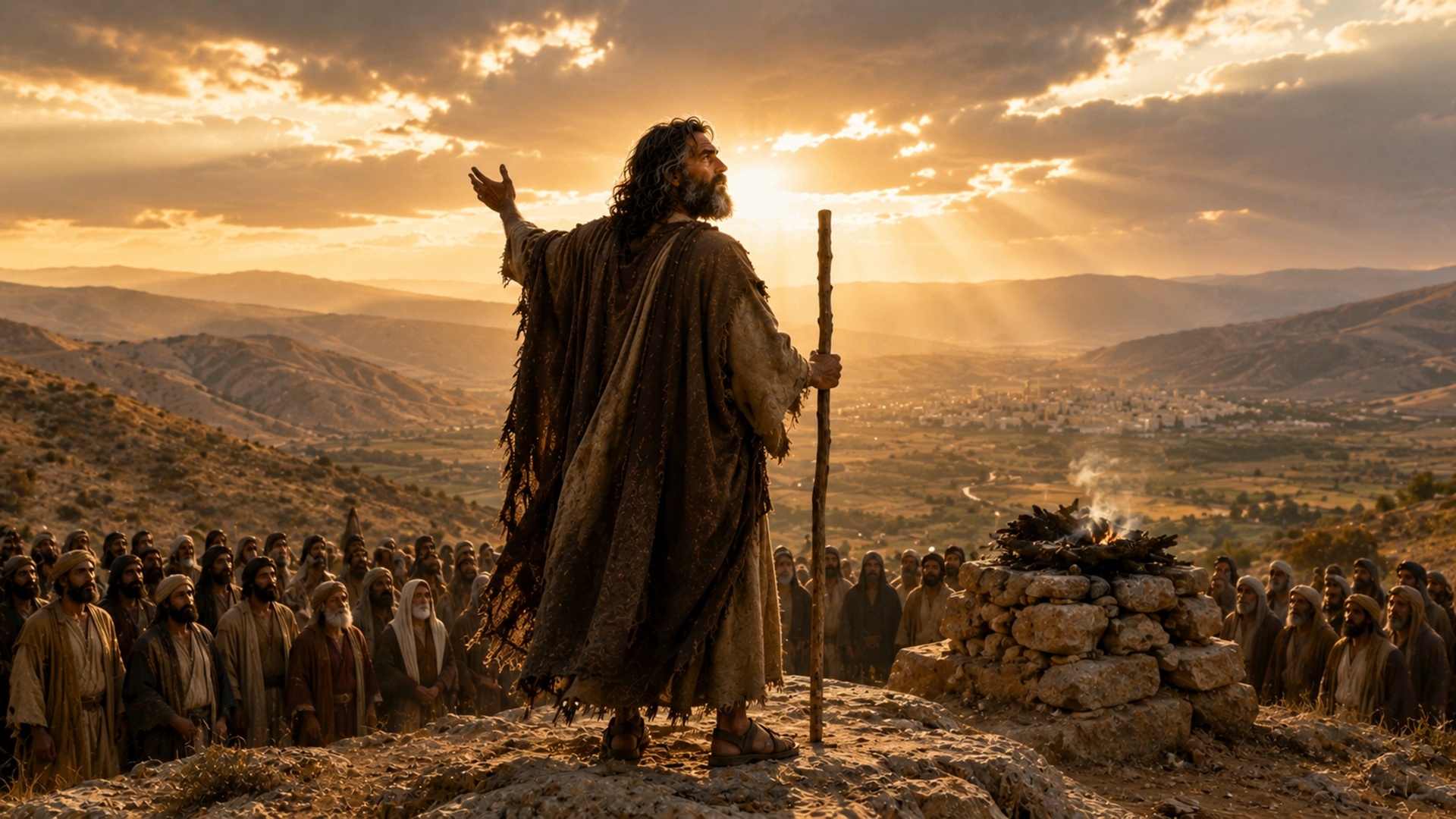
Just as Elijah drew a clear line on Mount Carmel between the Lord and Baal, so at the end of time the decision would also become unmistakably clear. No one would be able to remain permanently on both sides. Human tradition and divine commandment would stand in opposition, and every person would have to decide which authority to follow.
In this decisive time, God would call messengers who could not be silenced by ridicule, opposition, or threats. They were to proclaim the truth not harshly, but lovingly. Their goal would not be to condemn people, but to protect them from deception and lead them back to faithfulness to God.
These messengers would work in the spirit of Elijah. They were to be courageous, clear, and at the same time completely dependent on God. Like Elijah, they were not to seek strength in themselves. Prayer, faith, and obedience would enable them to stand firm even when public opinion and powerful institutions were against them.
The test would reveal what lived in the heart. Some who had long appeared to be shining stars would yield under the pressure of the world. Outward religion without a living connection to Christ would not endure. Only those who had accepted His righteousness and received His Word deeply into their hearts would stand.
Yet even in the darkest hour, God would have a faithful people. Scattered throughout the earth were people who had not knowingly bowed before the idols of this world. Many did not yet know the whole truth, but they sincerely followed the light they had received. God’s Spirit was working on their hearts and preparing them for further understanding.
These faithful ones would shine like stars in a dark night. The denser the spiritual darkness became, the more clearly their witness would be seen. Their obedience would not be the result of coercion or fear of people, but the fruit of their love for God.
Elijah once believed that he alone was left. But God revealed to him seven thousand people who had not bowed their knees to Baal. In the same way, God’s children today should not try to judge by appearances how many remain faithful to the Lord. God knows every heart and sees faithfulness that remains hidden from human eyes.
The task of believers is therefore not to count the faithful or become discouraged by the extent of apostasy. Rather, they are to possess a heart filled with the compassion of Christ. Instead of merely condemning the world, they are to work for the salvation of people, show them God’s truth, and make the beauty of obedience visible through their lives.
To work in the spirit and power of Elijah means to fear God more than people, to place His Word above human opinions, and yet to treat every person with love. It means having the courage to call error by its name without abandoning the sinner. It means standing firmly on God’s side while praying tirelessly for those who are still in darkness.
God is also seeking today people who will place themselves fully at His disposal. They do not need to hold a high position or possess extraordinary abilities. What matters is a heart willing to listen and obey. Through such people, the Lord can make His light visible in families, churches, cities, and entire nations.
The story of Elijah therefore does not end on Mount Carmel or at Horeb. Its spirit lives on in every person who resolutely takes God’s side. Wherever men and women trust God’s Word more than the voice of the majority, the same divine power is at work that enabled Elijah to stand before kings and call an entire nation to make a decision.
⋯⋯⋯⋯⋯⋯⋯⋯⋯⋯◆⋯⋯⋯⋯⋯⋯⋯⋯⋯⋯
🧺 Summary
Elijah’s life remains an example for God’s people in times of spiritual apostasy. Just as in the past, divine truth and human error still stand in opposition today. God’s law is unchangeable, and the Sabbath remains a sign of His creative power and His covenant. The Lord will call people who, in the spirit and power of Elijah, courageously call others to faithfulness. Despite the increasing darkness, God has sincere people throughout the earth who follow His light and will shine as faithful witnesses.
⋯⋯⋯⋯⋯⋯⋯⋯⋯⋯◆⋯⋯⋯⋯⋯⋯⋯⋯⋯⋯
🔦 Message for Us Today
God calls us not to shape our convictions according to the majority, traditions, or human convenience. His Word remains the sure standard. To live in the spirit of Elijah means to obey God wholeheartedly, share His truth courageously and lovingly, and remain faithful even in a time of widespread indifference. We are not alone: God knows people everywhere who are seeking light, and He desires to use us to reach them.
⋯⋯⋯⋯⋯⋯⋯⋯⋯⋯◆⋯⋯⋯⋯⋯⋯⋯⋯⋯⋯
📝 Reflection
Which modern “idols” claim my heart and attention today? Am I willing to follow God’s Word faithfully even when His standards contradict the opinion of the majority? Where does God want to use me so that His light may become visible through my life?
“If the Lord is God, follow Him; but if Baal, then follow him.” (1 Kings 18:21)
